
The Opportunity Signal Is Weak: Why Kisumu’s Youth Struggle to Access Public Programmes
Kisumu is often referred to as Dala(home). However, a city only feels like home when its young population can build a viable, secure future within it.
Across Kisumu County, young people are far from idle. They operate boda-bodas, run jua kali workshops, hawk goods, repair electronics, fish, build, and queue for public opportunities. Yet despite the presence of county enterprise funds, youth training programs, public participation forums, and statutory government procurement reservations, a glaring gap remains. The route from youth effort to stable work, affordable capital, public contracts, and policy influence is broken.
In her insightful paper, Josephine Adeti frames this issue not as a failure of youth willingness but as a breakdown in the delivery and feedback circuit between government institutions and young citizens.
Key Breakdown: Where the System Breaks Down
- Working Without Security: The problem is rarely complete inactivity; it is insecure, low-productivity work. While the informal sector employs over 60% of Kisumu’s gainfully employed population, survival activities without insurance, savings, or business growth do not constitute economic security.
- Paper Commitments vs. Real Access: Laws such as the Kisumu County Enterprise Fund Act and the 30% Access to Government Procurement Opportunities (AGPO) reservation exist. However, complex documentation, tax requirements, working capital barriers, and delayed public payments often create an impassable “access wall” for first-time youth entrepreneurs.
- A Weak Information Signal: Formal opportunities are often communicated through channels that do not reach ordinary youth. Posting a notice on a website or a county office board does not guarantee that the message reaches a rider or artisan in Nyakach, Muhoroni, or Kisumu West.
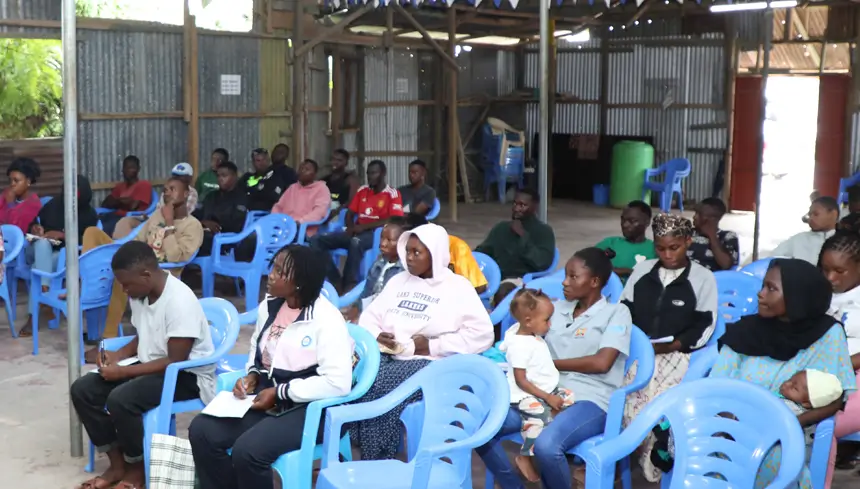
- Participation Without Feedback: Public participation forums are routinely measured by attendance lists rather than by actual policy influence. When youth attend meetings but never see their input shape county budgets or programs, engagement turns into disillusionment.
- Measuring Activity Instead of Livelihoods: County success is often tracked by short-term metrics, such as the number of loans disbursed or cleanup days organized, rather than by long-term indicators like business survival rates, sustainable income, or transition to stable employment.
Repairing the Circuit: Actionable Solutions
Fixing the youth empowerment system in Kisumu requires both institutional duty on the part of the county government and active, organized responsibility on the part of young citizens. Key recommendations include:
- Multi-Channel Information Transmission: Using SMS alerts, USSD codes, local radio, ward noticeboards, and community associations, along with digital portals, to ensure opportunity notices reach all wards in clear, plain language.
- Centralized Youth Opportunities Register: Creating a searchable web and USSD platform that tracks applications, deadlines, and the reasons for approval or rejection.
- Auditable Public Participation: Publishing participation reports that detail participant demographics, submitted proposals, and clear justifications for accepted or rejected inputs.
- Annual Youth Opportunity Scorecards: Tracking real economic outcomes—such as business survival, job creation, and payment timelines—six to twelve months post-intervention.
Read the Full Document
To explore the detailed empirical context, statutory legal frameworks (Public Procurement and Asset Disposal Act, Kisumu County Public Participation Act), and engineering-based systems approaches to youth empowerment, download the full paper below:
Download PDF: The Opportunity Signal Is Weak — Josephine Adeti